
Winter at Aoraki/Mt Cook, as it’s Meant to be Seen
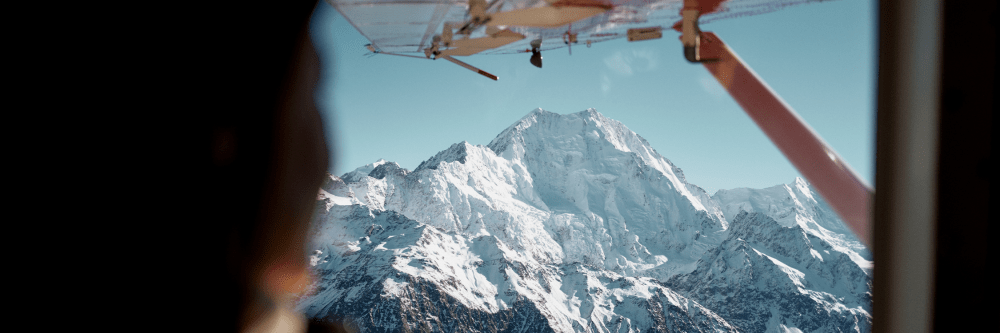
Discover what makes winter in Aoraki / Mt Cook unforgettable, from snow covered valleys to glacier landings by ski plane and helicopter. Plan your alpine experience.
There’s a moment in winter, usually just after take-off; when Aoraki / Mt Cook stops feeling like a place you’ve arrived at and starts feeling like something you’ve entered.
The valley drops away. Snow reshapes everything. And suddenly, what felt wide from the ground becomes immense.
This is the difference between simply paying Mt Cook a winter visit and truly discovering it.
Because winter here isn’t just about snow, or views, or even the mountains themselves. It’s about perspective. And the clearest way to access that perspective is from the air.
A Landscape That Only Exists Fully from Above
On the ground, winter simplifies the landscape.
Trails quieten. Valleys stretch longer under its white blanket, and peaks feel closer, but still held at a distance.
From the air, that distance disappears.
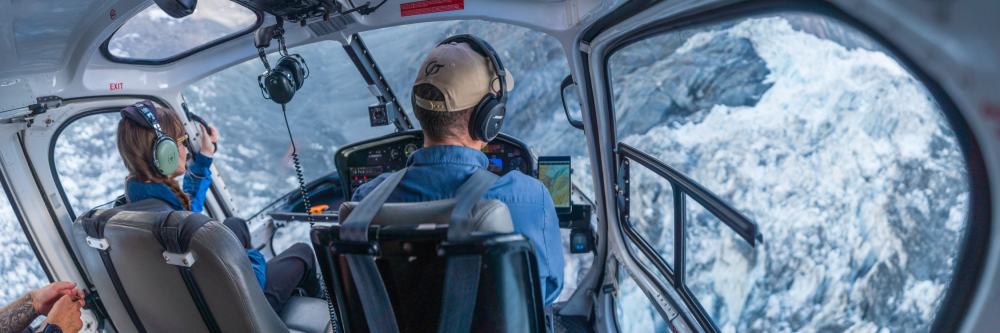
Ski planes and helicopters open up the full geography and scale of the region, revealing glacier systems, alpine basins, and ice formations that can’t be reached any other way. Some flights trace the length of the Tasman Glacier, climb past the Hochstetter Icefall, and move through an environment shaped entirely by snow and time.
It’s here that Aoraki / Mt Cook becomes less of a viewpoint and more of an immersive, living alpine system.
Why Snow Changes the Experience
Winter sharpens the detail that might otherwise be missed.
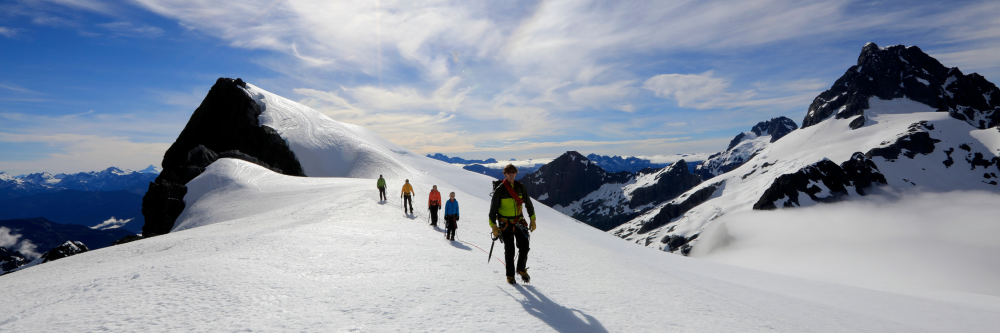
Light sits lower across the ranges, casting shadow into crevasses and carving definition into the ice. Snow smooths out distraction and highlights form ridge lines, wind patterns, the flow of glaciers through the valleys.
From above, these patterns become unmistakable.
Ski plane flights, in particular, offer a connected way to move through this landscape, gliding over wide snowfields and giving a strong sense of scale. Helicopters, meanwhile, allow access to different vantage points from tighter alpine spaces, revealing structure from different angles.
Together, they create a layered understanding of the terrain.
The Moment That Stays With You
There’s one part of the winter experience that tends to define it.
Not the take-off, or the climb, or even the views themselves, but the landing.
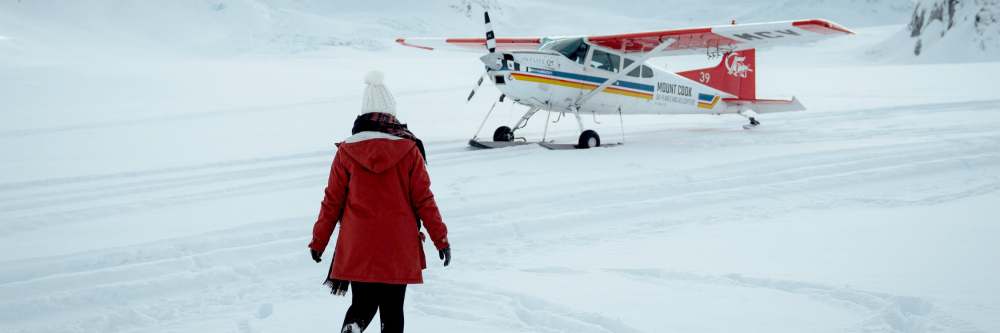
Touching down on the Tasman Glacier changes the pace entirely. The aircraft shuts off. The sound disappears. And you’re left standing in a vast field of snow and ice, surrounded by peaks that feel both distant and immediate at the same time.
You realise the immense scale of the Southern Alps & Aoraki, and how small it makes you feel against its towering beauty. It’s quiet in a way that feels complete. Not empty, just still.
And in winter, that stillness feels even more pronounced.
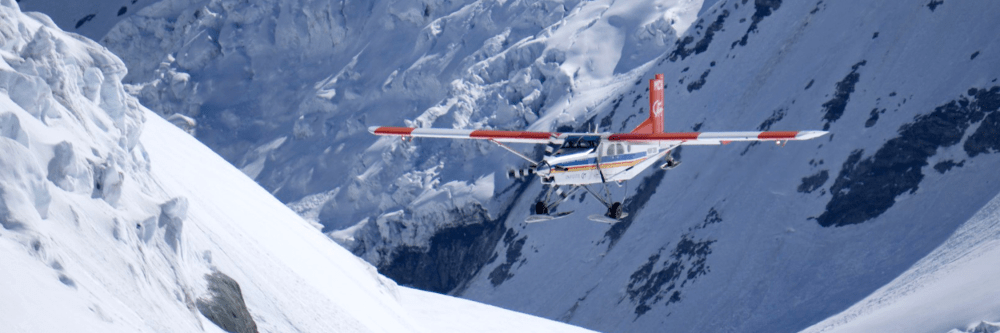
Ski Planes and Helicopters, Two Ways to Experience Mt Cook in Winter
It’s easy to think of ski planes and helicopters as two different options to scenic flights.
But in winter at Mt Cook, they create two quite unique experiences.
A ski plane has always been closely tied to the landscape since its invention in Mt Cook itself over 70 years ago. Your journey will follow the natural lines of the valleys and snowfields before landing directly on the glacier, giving the flight a smooth, grounded sense of connection to the landscape.
With its vertical lift, it can rise quickly above ridgelines, hover into tighter alpine spaces, and reveal the height and remoteness of the Southern Alps from angles that feel more dramatic and immediate.
Some Mt Cook experiences combine both aircraft in one journey, allowing you to take off in one, return in the other, and see the same winter landscape in two distinct ways.
That contrast, the glide of a ski plane and the lift of a Helicopter is what makes the experience feel so memorable.
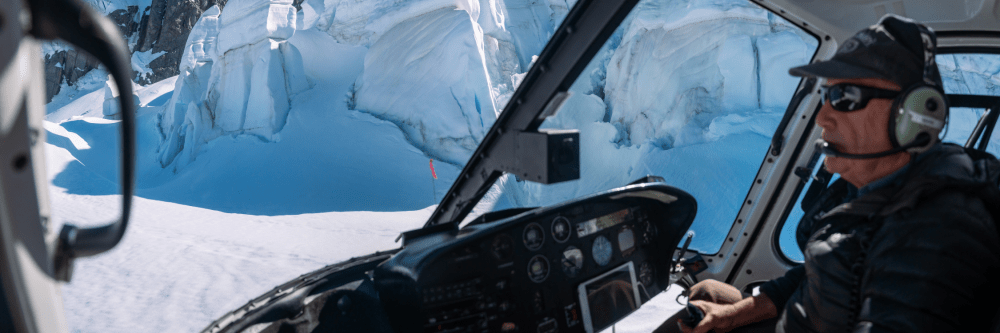
A Different Kind of Winter Destination
There are no ski lifts here. No crowded base areas. No rush to “do more”.
Winter in Aoraki / Mt Cook is defined by natural rhythm, weather systems, shifting light, and the quiet logic of alpine conditions.
Even the most iconic winter activities, like skiing the Tasman Glacier, begin with flight, reinforcing how central aviation is to the way this environment is accessed and understood.
It’s not winter as entertainment. It’s winter as environment.
Why Discovery Matters More Than Activity
Many people arrive looking for things to do in Aoraki / Mt Cook.
What they often leave with is something else: a sense of having seen something rare, and perhaps not fully comprehensible in one visit.
That’s because Mt Cook isn’t just experienced through movement, but through scale.
And scale is something you don’t fully grasp until you see it from the air, glaciers stretching kilometres, peaks pushing through cloud layers, entire valleys shaped by ice.
Once you’ve seen that, everything else falls into place.
Frequently Asked Questions
Question: Is winter a good time to visit Aoraki / Mt Cook?
Short answer: Yes, winter brings clearer air, stronger contrast in the landscape, and a quieter overall experience. Snow enhances the visibility of glacier features and alpine structure, making it one of the most visually striking times to visit.
Question: Why take a scenic flight in winter instead of just viewing from the ground?
Short answer: From the ground, you see selected viewpoints. From the air, you see the full system, glaciers, peaks, and valleys that are otherwise inaccessible. Scenic flights reveal the true scale of the Southern Alps in a way ground travel cannot.
Question: Where exactly is Mount Cook Ski Planes And Hecliopters?
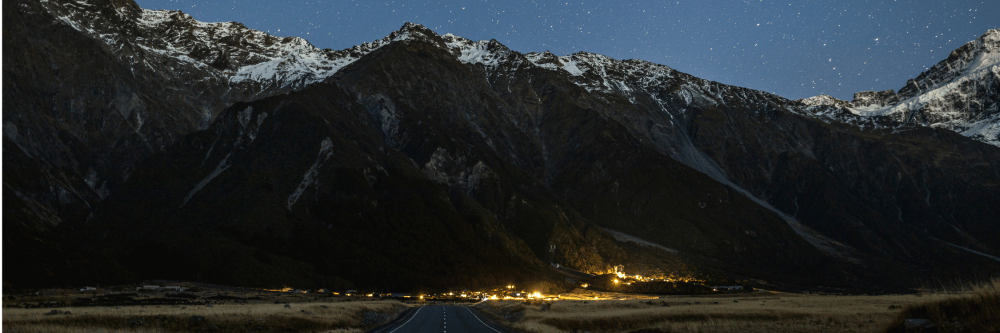
Short answer: Located within the Aoraki / Mount Cook national park, our base is the Mount Cook Airport. Keep driving on State Highway 80 towards the Mt Cook village, we’ll be on the right hand about 15 minutes after you’ve spotted Glentanner Airport. Here are some more details on getting here.
Question: What is a glacier landing like in winter?
Short answer: A glacier landing involves touching down directly on a snow-covered Glacier, stepping out onto the ice, and experiencing the quiet and scale of the alpine environment. Not all operators offer glacier landings, and the stillness and clarity of winter often make this moment feel more defined and immersive.
Question: What’s the difference between a ski plane and a helicopter experience?
Short answer: Ski planes offer a smooth, terrain-connected journey with a gliding landing on skis, while helicopters provide vertical access and wider vantage points across the mountains. With the Ultimate Alpine Experience you get both and a new, complete understanding of the landscape.
Question: Do ski planes and helicopters operate year-round in Mt Cook?
Short answer: Yes, weather permitting, scenic flights operate throughout the year, with ski planes uniquely capable of landing on snow-covered glaciers in both winter and summer conditions.
Question: How long do scenic flights at Mt Cook take?
Short answer: Flight durations vary – from shorter overview flights of around 25 minutes to extended scenic journeys approaching an hour, depending on the route and experience chosen.
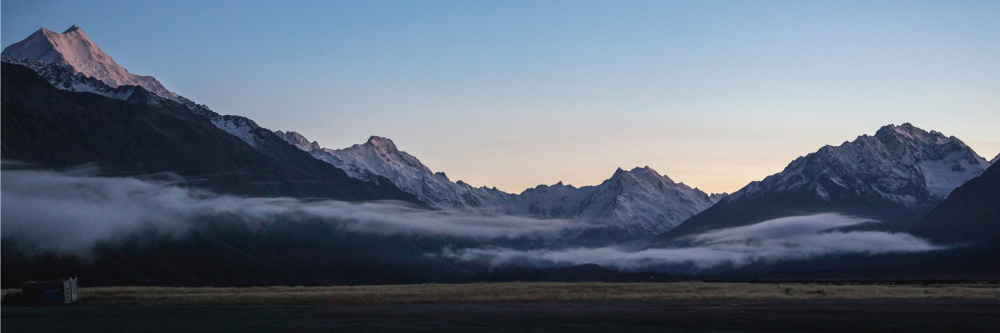
A Final Thought on Winter at Mt Cook
Winter doesn’t add something new to Aoraki / Mt Cook.
It reveals what was always there, just more clearly, more quietly, and more completely.
And for those who want to experience it that way, the journey doesn’t start on a track or at a viewpoint.
It starts the moment you lift off.